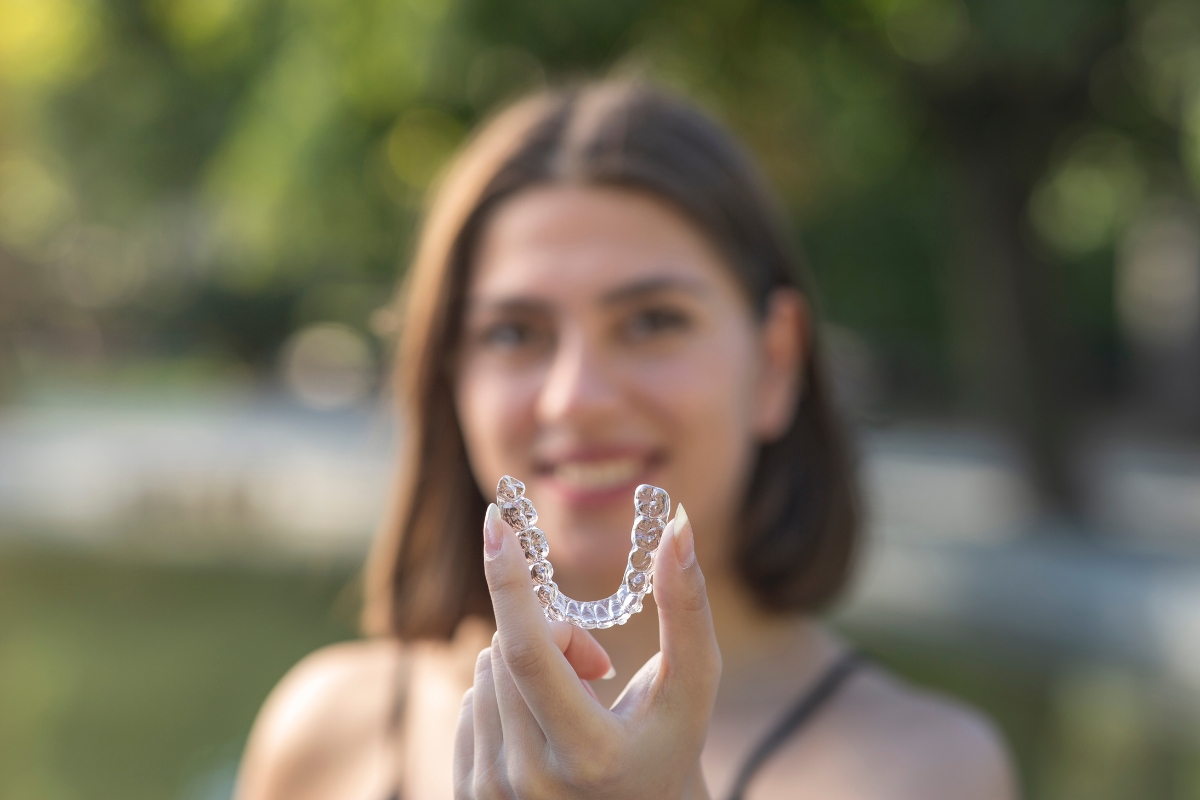
You finally decided to straighten your teeth as an adult, and you’re feeling good about it. Then you remember the crown you got after that root canal a few years back, or the fillings scattered across your molars from your twenties, and suddenly you’re not so sure Invisalign is even an option for you. If that thought has crossed your mind, you’re far from alone.
This is one of the most common questions dentists hear from adult patients considering clear aligners. The good news is that Invisalign with dental crowns is often perfectly possible, and in most cases, past dental work doesn’t disqualify you from a straighter smile.
Why This Question Comes Up So Often
Unlike traditional metal braces, Invisalign relies on a series of custom-fitted clear trays that gradually shift your teeth. Because these trays fit closely against your tooth surfaces, it’s reasonable to wonder whether crowns, fillings, or other restorations might interfere with the process.
The truth is, most adults seeking orthodontic treatment have some form of dental work already. Dentists plan for this regularly, which is why Invisalign eligibility depends far more on the overall health and position of your teeth than on whether you’ve had a crown or filling in the past.
Can You Get Invisalign With Crowns?
In most cases, yes. Crowns are designed to function just like natural teeth, which means aligners can typically move them along with the rest of your smile.
That said, a few factors matter:
- Where the crowned tooth is positioned in your mouth
- How much movement that specific tooth needs
- The condition of the gum tissue and supporting bone around the tooth
- Whether the crown is properly bonded and stable
Your dentist will evaluate these details during your consultation to confirm that Invisalign with dental crowns is a safe and effective option for your specific smile.
What About Fillings?
Fillings are even less likely to cause complications. Since fillings restore the internal structure of a tooth rather than replacing its outer shape entirely, they generally don’t interfere with aligner treatment at all.
Invisalign with fillings is considered routine in most dental practices. Whether you have one small filling or several, your treatment plan can usually move forward without major adjustments.
When Extra Care Might Be Needed
While most patients with crowns or fillings are good candidates, there are situations where your dentist may take a closer look before starting treatment:
- Large crowns covering multiple surfaces of a tooth
- Teeth with both a crown and significant bone loss
- Older fillings that may need replacement first
- Crowns placed very close to the gumline
None of these automatically rule out treatment. They simply mean your dentist may want to plan more carefully or address any underlying issues first.
How Invisalign Dental Restorations Are Handled
When you have crowns, fillings, or other restorations, your dentist typically follows a slightly more detailed planning process to ensure predictable results.
- Digital scans capture the exact shape of restored teeth
- Treatment planning software maps out realistic movement
- Attachments (small tooth-colored bumps) may be added for extra grip
- Progress is monitored closely to confirm aligners are tracking properly
This approach allows for accurate movement, even on teeth that aren’t in their original, natural form.
What About Veneers, Bridges, or Implants?
Crowns and fillings are common, but they’re not the only restorations patients bring up. Veneers can usually be moved with aligners, similar to crowns. Bridges are more complex since they connect multiple teeth together, which may limit certain movements. Dental implants, on the other hand, are fused to the jawbone and cannot move at all, so treatment plans are built around them rather than moving them directly.
This is why a personalized evaluation matters so much. No two smiles, or dental histories, are exactly alike.
Orthodontic Treatment With Crowns: What to Expect
If you’re moving forward with orthodontic treatment with crowns already in place, here’s a general idea of what the process looks like:
- A detailed oral assessment followed by a digital 3D scan
- Discussion of any existing restorations and their condition
- A custom treatment plan built around your specific dental history
- Regular check-ins to monitor movement and comfort
- Adjustments to your aligner series as needed
This process is designed to protect your existing dental work while still achieving a straighter, healthier smile.
Why a Consultation Makes All the Difference
Every mouth is different, which is why online information can only go so far. A consultation allows your dentist to physically assess your crowns, fillings, and overall oral health before recommending a treatment path.
If you’re located nearby and curious about your options, exploring Invisalign in Wichita Falls with a local provider can give you clear, personalized answers instead of general guesswork.
Tips for a Smooth Treatment Experience
If you do move forward with Invisalign alongside existing dental work, a few habits can help things go smoothly:
- Keep up with regular cleanings during treatment
- Mention any new sensitivity around crowns or fillings right away
- Wear aligners as directed to keep treatment on schedule
- Avoid skipping check-ins, even if things feel fine
Keeping up with your appointments can help identify developing concerns before they require more involved care.
Wondering Whether Clear Aligners Fit Your Smile?
Having crowns or fillings doesn’t automatically stand between you and a straighter smile. With proper planning and a dentist who understands your dental history, most patients find that treatment moves forward smoothly and predictably.
If you’re ready to get real answers instead of guessing, Spearmint Dental & Orthodontics – Wichita Falls is here to help. Schedule a consultation today and take the first step toward the confident smile you’ve been picturing.
Frequently Asked Questions
Can I get Invisalign if I have a crown?
Yes, in most cases Invisalign can move teeth with crowns just like natural teeth. Your dentist will evaluate the crown’s condition and position first.
Does Invisalign work with fillings?
Yes, fillings typically don’t affect Invisalign treatment at all. Since fillings restore internal tooth structure, they rarely interfere with aligner movement.
Are veneers a problem for Invisalign?
Veneers usually aren’t a problem and can move similarly to natural teeth. Your dentist will confirm this during your initial evaluation.
Can dental implants be moved with Invisalign?
No, dental implants are fused to the jawbone and cannot be moved. Treatment plans are designed around implants rather than shifting them.
How do I know if I’m a good candidate for Invisalign?
The best way to know is through a dental consultation and digital scan. Your dentist will assess your teeth, restorations, and bite to confirm eligibility.